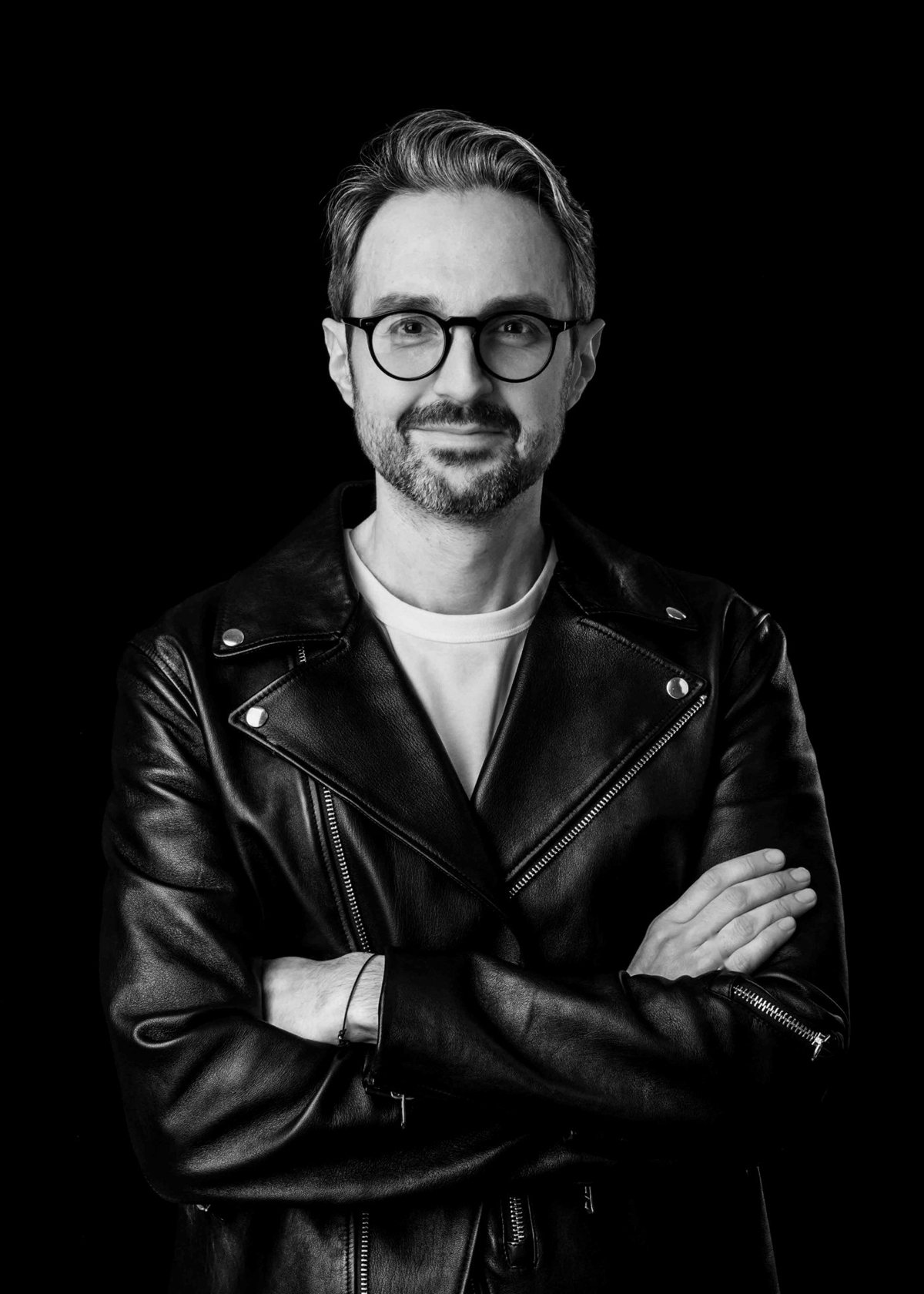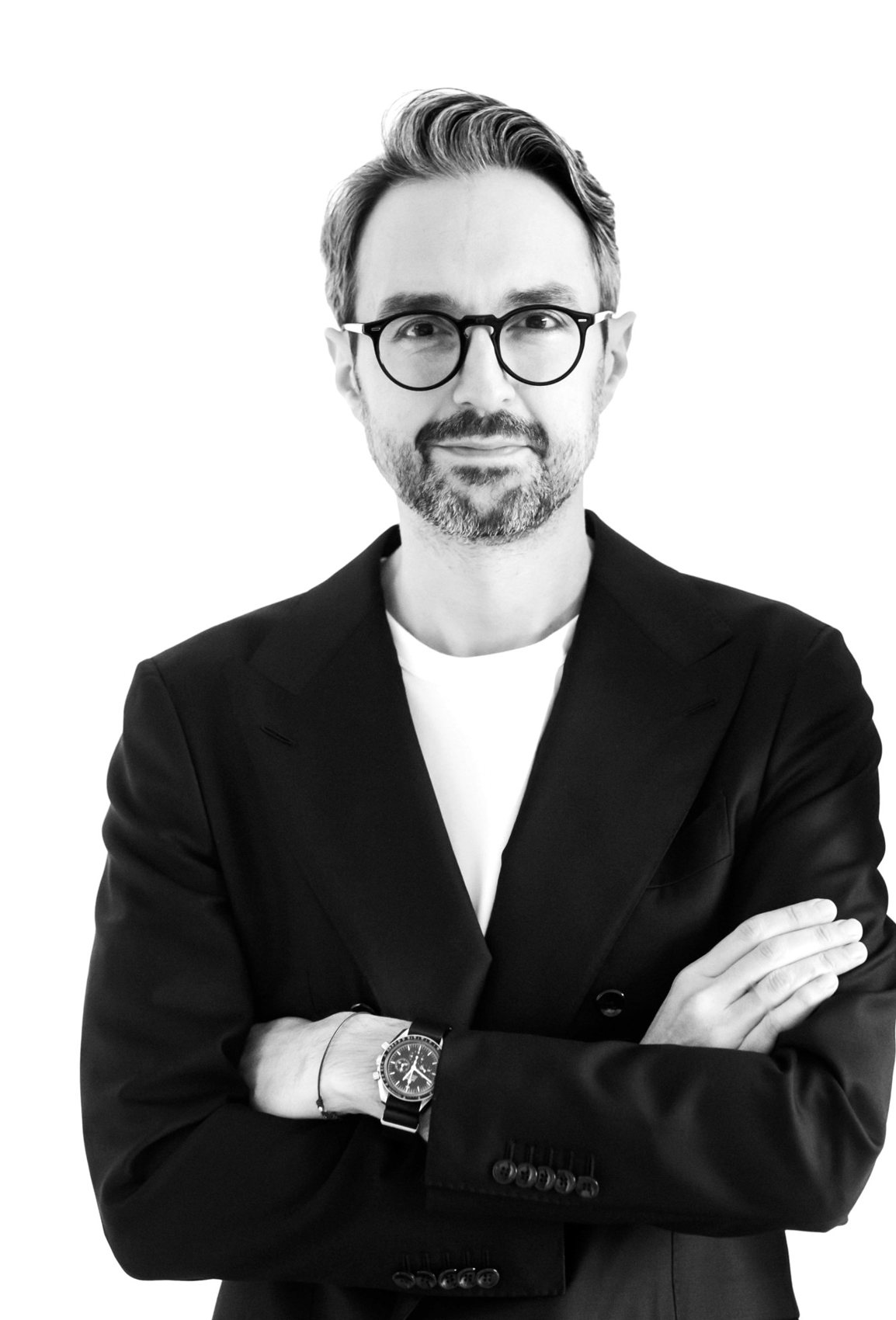

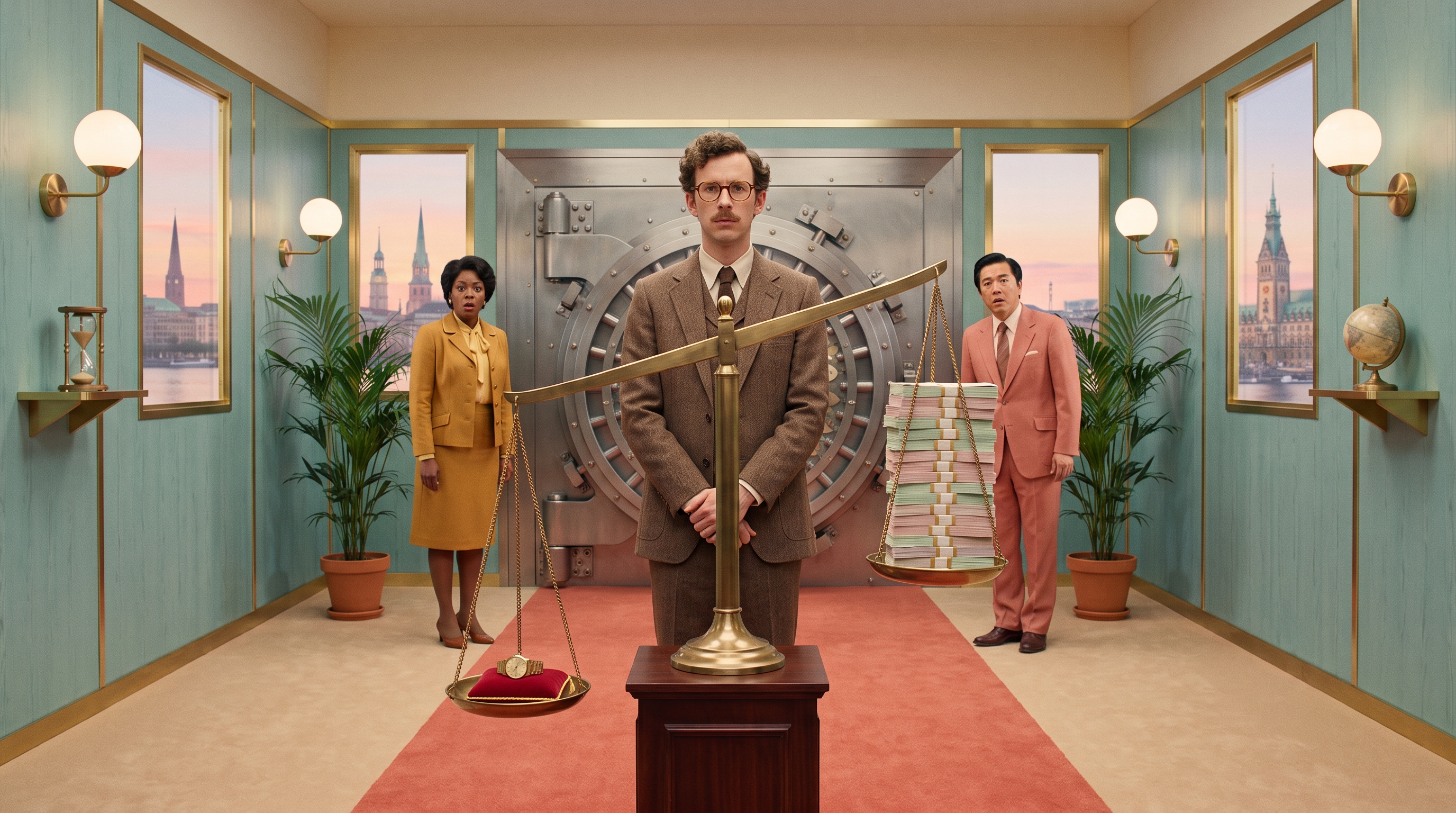
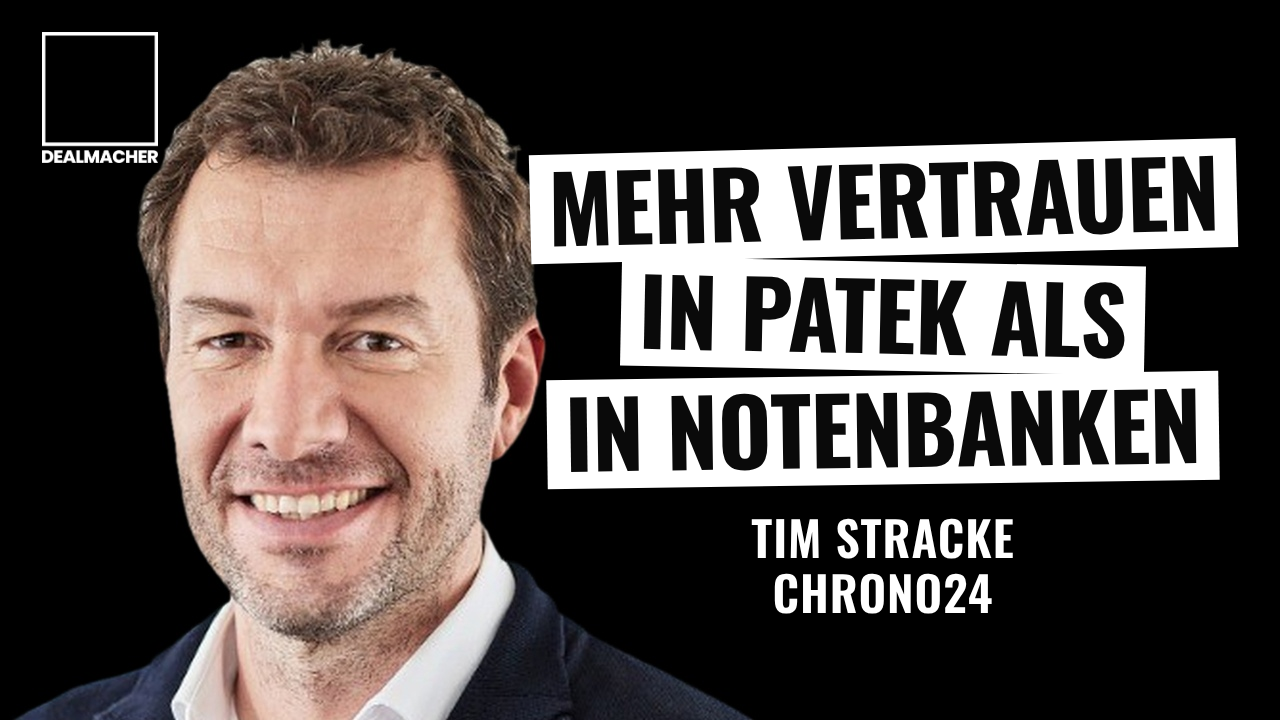
Tim Stracke, co-founder of Chrono24, trusts watchmakers like Rolex and Patek Philippe more than many central banks, because they treat scarcity as discipline. On the DEALMACHER Podcast he explains why he bought Chrono24 instead of building a rival, how he set the valuation in every funding round himself, and why Cristiano Ronaldo invested without any obligations.
Tim Stracke trusts Patek Philippe and Rolex more than many central banks. Tim is the co-founder of Chrono24, the world’s largest marketplace for luxury watches, and my guest on the latest episode of my DEALMACHER Podcast. We talked about how he bought the platform, how he ran its funding rounds, and what he would do differently today.
Scarcity as discipline
His argument: the watchmakers take scarcity seriously. Good watchmakers are scarce, and production cannot be scaled at will. “They are more trustworthy than many presidents of currencies, who reach for the printing press faster than the watchmakers do,” he told me.
Rolex proved the point during the recent watch boom. For two or three years, nobody could get their hands on the popular models. In Tim’s view, almost any other CEO would have ramped up production and made the money of a lifetime. Rolex did not. Tim describes a company that thinks in cycles of ten to twenty years and lets a boom pass.
Buying instead of building
Chrono24 was a side project of two founders when Tim first saw it in 2009. He disliked the name and the product, but the platform had something he could not build quickly: traction on both sides of the marketplace.
Tim estimated the business at 200,000 to 300,000 euros. After nine months of negotiation, in the middle of the financial crisis, he paid a multiple of that. What settled it was an Excel model with two scenarios: buy Chrono24, or compete against it. Competing meant building the technology anyway and fighting an established rival. Buying meant speed.
Financing the deal was its own lesson. Venture capital funds saw an acquisition, not a venture deal. Buyout funds offered buyout terms. In the end, the private equity arm of a regional savings bank backed it.
The founder writes the term sheet
Tim starts every round low-key: a warm intro, a conversation about the vision, nothing in writing. Investors who like what they hear give an informal, non-binding yes, and Tim keeps them in the loop. He collects these commitments until they add up to three to five times the planned round. Only then does he call everyone back and get concrete.
At that point, Chrono24 sent the term sheets itself, with the valuation already filled in. “We always set the valuation,” Tim said. That held even in the round of more than 100 million euros. Some investors crossed out the amount and wrote in a bigger one. One of them lost anyway: Chrono24 chose General Atlantic, because it was the partner best placed to help with a possible IPO. The IPO never happened. Tim still calls it the right decision, because General Atlantic helped institutionalise the company.
What a famous investor is really worth
Cristiano Ronaldo invested in Chrono24, after a chain of introductions that started with General Atlantic. Tim’s team made the entry easy, with a significant discount, and asked for nothing in return. The contracts contained no obligations at all.
The reasoning: once you negotiate Instagram posts, you are no longer talking to the player but to his agency, and the posts get priced in. Ronaldo posted anyway, unpaid. Tim sees the same effect with institutional names: LVMH’s family office or Insight Partners on the cap table opened doors for a then unknown company from Karlsruhe.
One cut, not two
Chrono24 went through two rounds of job cuts while it was profitable, after hiring aggressively during the boom. Tim calls the second round a mistake he had warned other founders about himself: if you cut, cut deep enough to do it once.
He was just as clear on ownership. A CEO who says “the board decided” is no longer seen as the CEO. “Then you are not talking to the CEO, you are talking to a puppet of the board.”
Watches versus the stock market
If you really know both stocks and watches, Tim believes you are more likely to beat the market with watches than on the stock exchange. Chrono24’s own data adds texture: users track around 70 billion euros worth of watches on the platform. The probability that a collection starts with a Rolex is almost exactly the same as the probability that its twentieth watch is one.
The full episode
The second half of the episode is pure watch talk. Tim explains why he would never wear a quartz watch, even with a Patek Philippe logo on it, and how the Rolex waiting list really works. He gives his buying advice for budgets from under 1,000 to 30,000 euros. And in a watch shootout across three price ranges, he has to pick one of two watches every time, including Speedmaster against Submariner and Royal Oak against Nautilus.
Listen to the full conversation on the DEALMACHER Podcast.
Frequently asked questions
Why does Tim Stracke trust watchmakers more than central banks?
Because the big watchmakers treat scarcity as discipline. Good watchmakers are scarce and production cannot be scaled at will. During the recent watch boom, Rolex did not ramp up production, while central banks, in his words, reach for the printing press faster.
How did Chrono24 set the valuation in its funding rounds?
Tim Stracke first collected informal, non-binding commitments until they added up to three to five times the planned round. Then Chrono24 sent the term sheets itself, with the valuation already filled in. That held even in the round of more than 100 million euros.
Why did Chrono24 choose General Atlantic as an investor?
Because General Atlantic was the partner best placed to help with a possible IPO. The IPO never happened, but Tim still calls it the right decision, because General Atlantic helped institutionalise the company.
What is a famous investor worth to a startup?
At Chrono24, Cristiano Ronaldo invested with no obligations in the contracts and posted about the company anyway, unpaid. Institutional names like LVMH’s family office or Insight Partners on the cap table opened doors for a then unknown company from Karlsruhe.