An executive dress code matters because people estimate competence from clothing within a fraction of a second, and research shows the effect survives even when observers try to ignore it. Fit, condition and coherence drive the read more than price. A practical rule is to dress one level above the median of the room.
Does an executive dress code still matter?
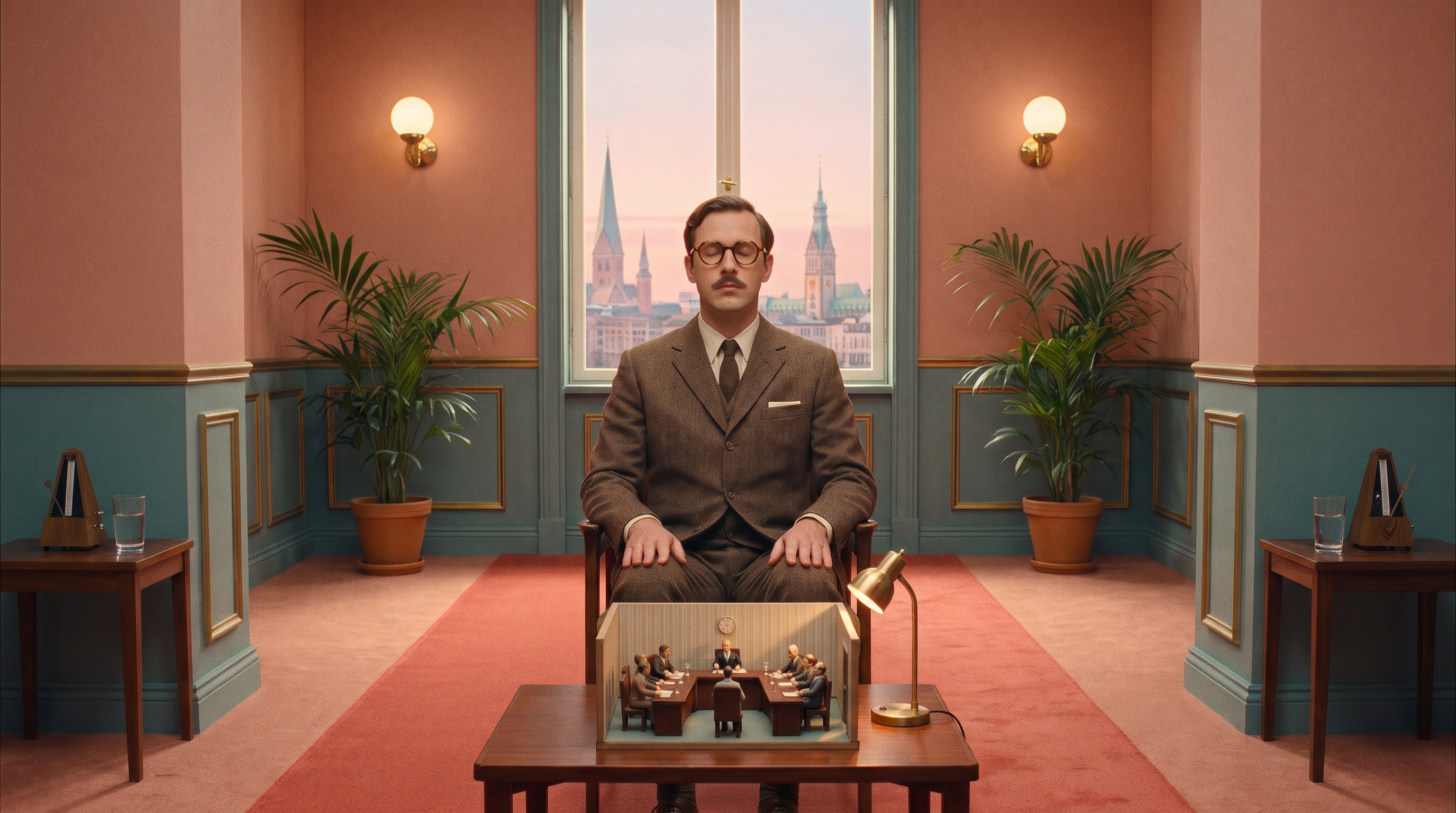
Yes, and the reason is uncomfortable. The people across the table form an estimate of your competence before you speak, and part of that estimate comes from your clothes. It is one of the better-evidenced findings in research on first impressions. Many executives prefer to treat it as a question of taste, which makes it easy to ignore.
That holds in sectors that have dropped formal dress codes too. Tech, venture capital and most startups have no written rules left about suits and ties. The perception mechanism works the same in a hoodie environment as in a bank. Only the reference point moves.
What does research say about clothing and perceived competence?
Oh, Shafir and Todorov ran nine studies on this question (Nature Human Behaviour, 2020). People rated the competence of faces in frontal headshots. Each face was shown with different clothing on the upper body. A separate group had rated those clothes as looking more or less affluent, with differences kept subtle. Faces in the richer-looking clothing were judged significantly more competent.
The striking part is how robust the effect was:
- It held when the images were shown for 129 milliseconds.
- It held when people were told the clothing carried no information, and when they were told to ignore it.
- It held even with a financial reward for disregarding the clothes.
- It held when they knew the person's profession and income.
- It held for formal and informal clothing alike.
Awareness, instruction and money are the usual ways to correct a bias. None of them switched this one off. It is the halo effect in a clean form: one visible attribute colours the judgment of qualities that have nothing to do with it.
The researchers also note that this bias adds another disadvantage for people who are already disadvantaged, and that it can become self-fulfilling. That deserves saying plainly. Describing how perception works is different from approving of it.
What matters more than the price of the clothes?
The studies varied how rich the clothing looked to observers. They never measured what it cost. For anyone deciding what to wear, that is the useful part. Three factors drive the read, and none of them depends mainly on budget:
- Fit: the biggest lever and the cheapest one. A moderately priced jacket that has been properly altered reads better than an expensive one off the rack. Fit is visible at a glance. Brand mostly is not.
- Condition: frayed collars, tired shoes and shirts washed too often register below conscious notice, and they register reliably.
- Coherence: whether the pieces look chosen together or thrown together in the morning.
All three read as deliberate, and deliberate is the actual signal.
Can dressing down work for a CEO?
Sometimes. Bellezza, Gino and Keinan described what they called the red sneakers effect (Journal of Consumer Research, 2014). Breaking a dress norm on purpose, for example with red sneakers at a formal event, can make observers rate a person as higher in status and competence. The explanation is perceived autonomy. If someone visibly knows the rule and still breaks it, observers assume that person can afford to.
The conditions matter more than the finding. The effect disappears when:
- the observer does not know the environment,
- the deviation looks unintentional,
- there is no shared standard to deviate from.
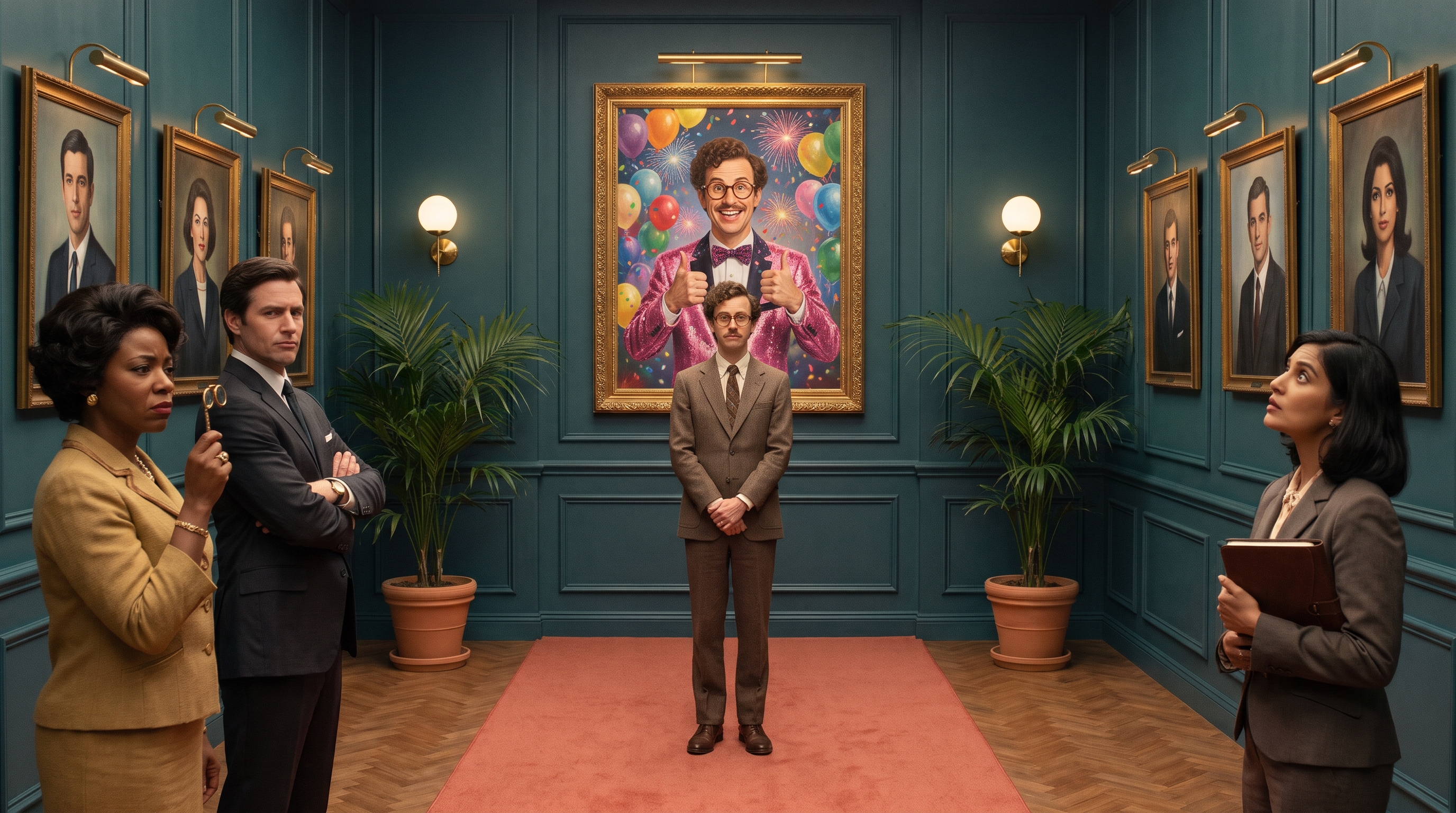
In practice, the move works when everyone in the room can see the rule and can see that you know it. In front of people who do not know you, or in a setting with no clear norm, the same choice reads as a mistake. Dressing down is therefore available to executives whose standing is already established, and risky for everyone else in the same room.
What works is a single deviation, kept up over time, in places where everyone knows the norm. One deviation is a signature. Three is a costume.
What does a signature look like in practice?
My own example: I wear fashion rings and mechanical watches. In European tech, few men wear jewellery, and most wrists carry a smartwatch. None of the three conditions that cancel the effect applies:
- The people around me know the environment.
- Nobody wears rings by accident, so the choice cannot read as an error.
- There is a norm to break. Tech has dropped formality, but it holds firmly to looking unconcerned about appearance. The rings break that norm.
The watches taught me something that took longer to see. Consistency works at the level of the category. The specific watch changes, but it is always mechanical, and a mechanical watch in a room of smartwatches is the signal. The rings are always there.
One condition is easy to miss. Perceived autonomy only reads as autonomy when your standing is clear from something else. The same rings on someone the room cannot place may look odd instead of assured.
Does what you wear change how you perform?
The idea is called enclothed cognition, and the evidence is weaker than the evidence above. Its most famous result came from a lab coat study: people wearing the coat did better on an attention test. A large, preregistered replication of that exact experiment did not find the effect. The original authors accepted the replication as competent. They point to other successful conceptual replications and to a meta-analysis that supports the broader idea. That meta-analysis comes from the same authors, which is worth keeping in mind.
The two effects therefore deserve different confidence. How clothes change the judgment of observers held up under every test. The effect on you is plausible, partly supported and unsettled.
What should a CEO actually wear?
The room will run its estimate either way. The only choice is what it runs on. A few working rules:
- One level above the median of the room: two levels above reads as trying.
- Fit before price: a tailor usually adds more than a new label.
- Condition before newness: replace what looks worn before buying what is new.
- Repetition before variety: people recognise you through repeated elements, and a distinctive look worn inconsistently builds no recognition. A small set of repeated pieces also saves a decision every morning.
On video, the frame is exactly the surface the research tested. Shoulders and collar carry more weight in a call than a full outfit does in a room. My guide on executive presence covers the rest of how you show up on camera and in high-stakes moments.
Clothing is the signal people receive before you speak. What you say next, and how firmly you stand behind it, decides how much weight the room gives your words.
“One deviation is a signature. Three is a costume.”
Frequently asked questions
What is a good dress code for a startup CEO?
One level above the median of the room you are in, with fit, condition and coherence before price. In casual sectors that might be a well-fitting jacket over the same basics everyone else wears.
Does clothing really affect how competent people think you are?
Yes. Research by Oh, Shafir and Todorov found that richer-looking clothing raised perceived competence, even at 129 milliseconds and even when observers were paid to ignore it.
Can a CEO dress casually in investor meetings?
It can work when your standing is already clear and the room knows the norm you are breaking. In front of people who do not know you, it often reads as a mistake.
Do you help executives with how they come across?
Yes. How a CEO is perceived, from presence and appearance to positioning, is part of my executive branding work. You can read more about my executive branding advisory.