

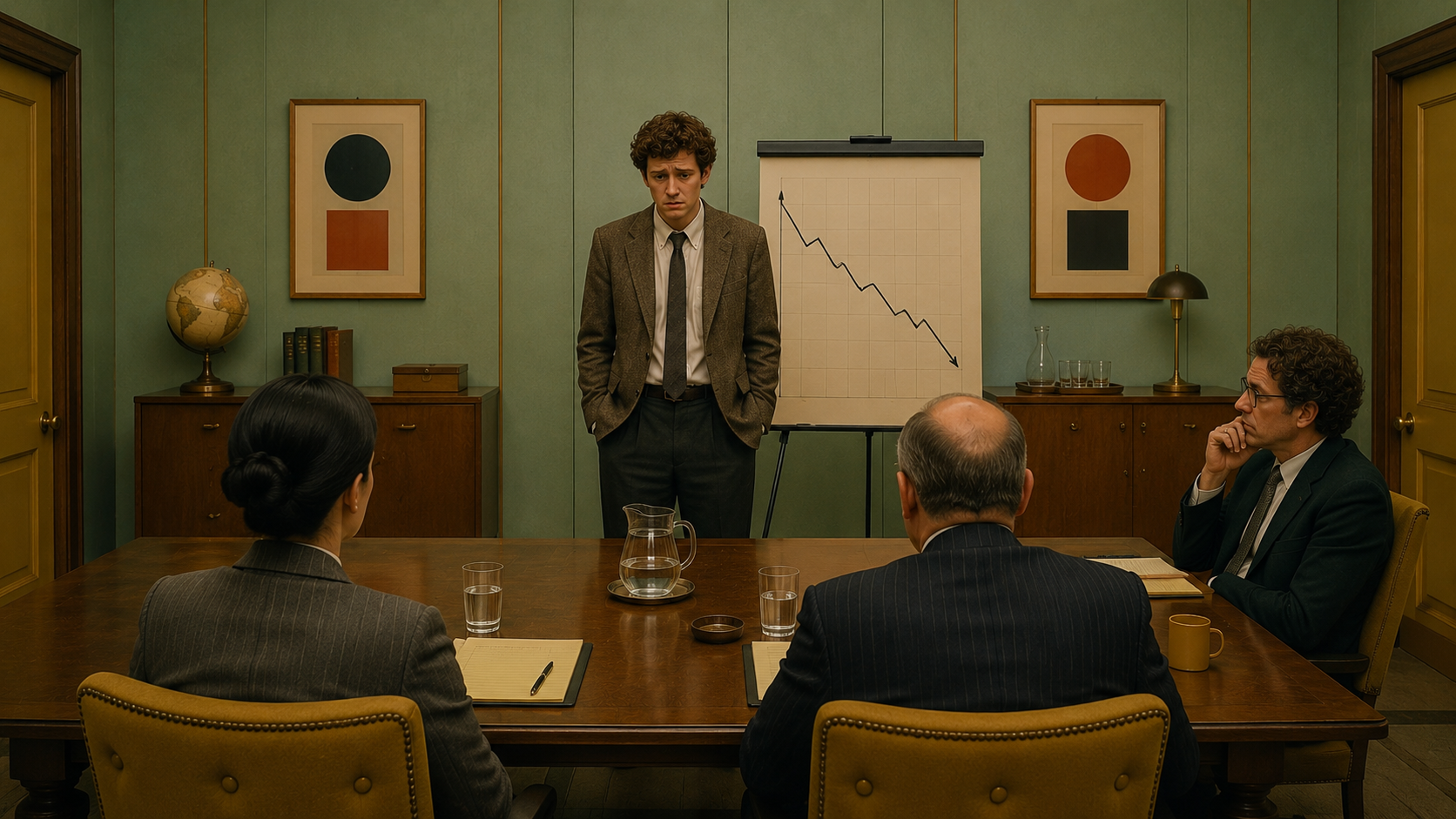
Conviction is contagious, and so is doubt. In an investor meeting, a VC does not recompute your business but reads you, mostly in the first two minutes. Founders who walk in convinced run a routine that works on beliefs and physiology: decide you will be fine, reframe doubts, act as if it is the second meeting, and use the body.
Every founder has doubts about their company. The question is not whether you have them, it is whether you carry them into the room. Because a VC will not recompute your business in thirty minutes – they read you. And they pick up doubt faster than any slide can cover it.
The sharper and more analytical you are, the more clearly you see everything that can go wrong: the competitor that could move, the assumption that might not hold, the part of the plan that is still thin. That clarity is a superpower when you build. It turns into a liability the second you walk into a room, because the weight of it leaks.
It leaks because the person across the table is not running your model. So they do something faster and older: they read you. Are you convinced this works, or are you hoping it does? That read happens in the first two minutes, mostly below the level of anything you say, and it colors how every answer after it lands.
Conviction is contagious. So is doubt.
This is not artificial positive thinking. Stress under real pressure is not only a state of mind, it is a state of the body. Under threat your chest tightens and your working memory narrows at the exact moment you need it most. Telling yourself to relax does nothing, because the body does not respond to reassurance. It responds to inputs.
So the founders who walk in convinced, calm and charged are not braver by nature. They run a routine before the room, and it works on both layers at once: the beliefs that fear distorts, and the physiology that carries the stress.
A few of the moves that matter most:
Decide, before you walk in, that whatever happens, you will be fine: Even the worst case is survivable, for you and for the people who work with you. Fear of failing is the single biggest thing that makes founders tense, and tension is what kills your potential in a meeting.
Reframe your doubts: Large upside only exists where there is large downside, and every company worth backing has plenty of reasons it might not work. Your doubts are not a warning that you are wrong. They are the tax on a real opportunity. Accept them, then prime your mind only on the upside.
Walk in as if it is the second meeting, not the first: Assume the other side is already interested. The founder who believes the room is cold is defensive and over-eager. The one who believes it is warm is relaxed and inviting, and that posture tends to make the warmth real.
And use the body directly: A few slow breaths with a long exhale downshift the stress response within a minute. Stand tall, warm up your voice, arrive hot instead of cold. The state you bring in the first ten seconds is the state you will be talking out of for the next thirty minutes.
The content of your pitch tells the story. The state you walk in with is what makes them believe it.
Frequently asked questions
Why does founder conviction matter in a pitch?
A VC will not recompute your business in thirty minutes. They read you instead, mostly in the first two minutes and below the level of what you say, and that read colors how every later answer lands.
Why does telling yourself to relax not work before a pitch?
Stress under real pressure is a state of the body, not only of the mind. The body does not respond to reassurance, it responds to inputs such as slow breaths with a long exhale.
How should founders deal with doubts about their company?
Reframe them. Large upside only exists where there is large downside, so your doubts are the tax on a real opportunity. Accept them, then prime your mind on the upside.
How can I prepare physically for an investor meeting?
Take a few slow breaths with a long exhale, stand tall, warm up your voice and arrive hot instead of cold. The state you bring in the first ten seconds carries the next thirty minutes.

