

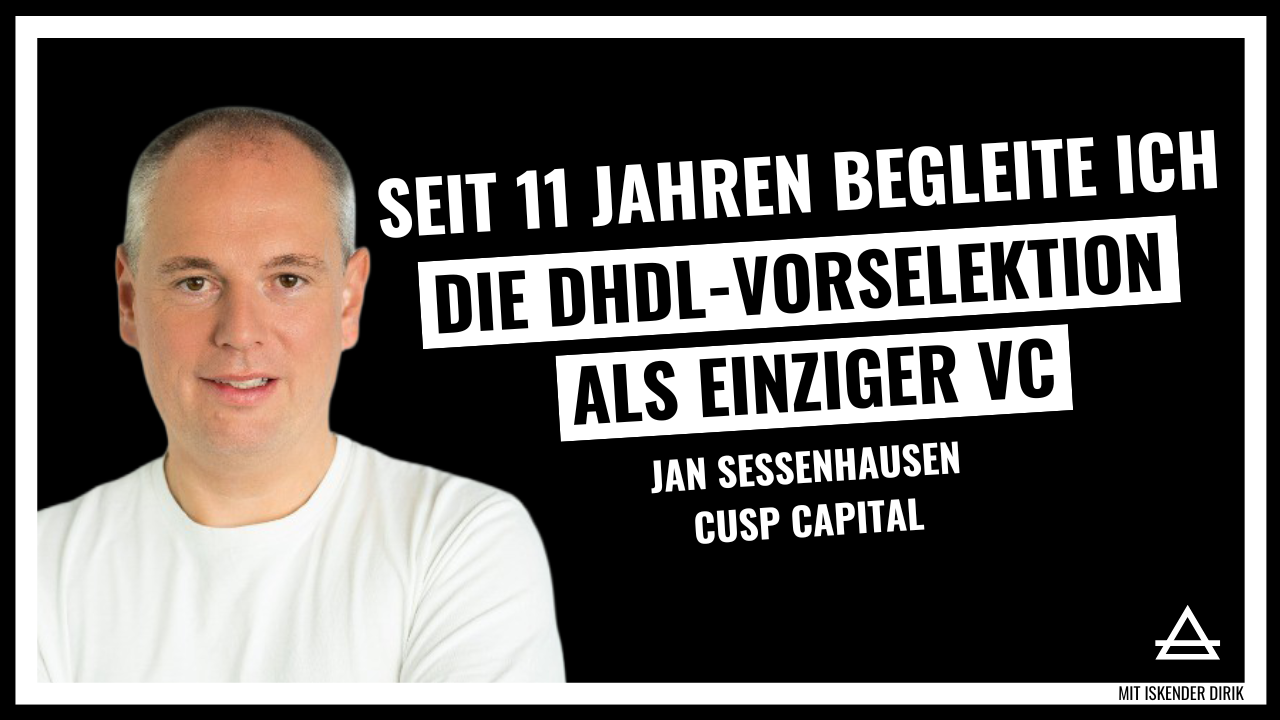
Irrational confidence is a founder’s choice to believe in a positive outcome while deliberately blocking out doubts, says Jan Sessenhausen of Cusp Capital, who has helped pre-select pitches for Die Höhle der Löwen for over 11 years. It is not arrogance. Founders can build it by pitching the shift, using customer feedback, repetition and selective ignorance.
In the latest DEALMACHER Podcast episode, I spoke with Jan Sessenhausen, Partner at Cusp Capital and the only VC involved in the pre-selection process of “Die Höhle der Löwen” (German Shark Tank) for over 11 years.
Jan has seen thousands of founders pitch – on TV, in data rooms, and across every fundraise stage.
And one trait stands out again and again:
“Irrational confidence is when you ignore your own doubts and deliberately block out critical questions – because you choose to believe in a positive outcome.” – Jan Sessenhausen
It’s not arrogance. It’s not naivety.
It’s a founder’s emotional edge – the unshakable belief that this will work, even when everything around says otherwise.
What Makes This Confidence “Irrational”?
Because rational thinking says:
- You’ve never done this before.
- Your product has gaps.
- Others have failed in this space.
- The odds are stacked against you.
But you still go all in. That’s irrational.
Jan compares it to pro basketball:
“In the NBA, the average field goal percentage is below 50%. But every player shoots like it’s going in.”
You don’t raise millions or take on markets by being “reasonable.”
You raise because you believe – and your belief becomes contagious.
How to Cultivate Irrational Confidence (Without Losing Your Mind)
1. Zoom Out from the Product
Pitch the shift. Not just your codebase – but what your product enables in the world.
2. Use Customer Feedback as Fuel
One real, emotional testimonial beats 50 cold metrics. Anchor your belief in users.
3. Own Your Story through Repetition
Confidence grows with clarity. Say your pitch 100 times. Not to memorize – to internalize.
4. Hang Out with Builders, Not Critics
Confidence is social. Surround yourself with people who act instead of analyzing to death.
5. Practice “Selective Ignorance”
Yes, know your risks. But in key moments, mute them. Believe in your future self more than your current fears.
Final Thought
Every founder doubts.
The difference is what you do with that doubt.
Will you let it freeze you – or fuel your clarity?
Irrational confidence is not about lying to others.
It’s about choosing belief when evidence is incomplete – and acting from that place.
That’s not irrational.
That’s leadership.

Frequently asked questions
What is irrational confidence?
In Jan Sessenhausen’s words, it is when you ignore your own doubts and deliberately block out critical questions because you choose to believe in a positive outcome. It is not arrogance and not naivety.
Why do founders need irrational confidence?
Rational thinking says you have never done this before, your product has gaps and the odds are against you. Founders go all in anyway, and their belief becomes contagious for investors.
How can founders build irrational confidence?
Zoom out from the product and pitch the shift, use customer feedback as fuel, say your pitch until you internalize it, spend time with builders instead of critics, and practice selective ignorance in key moments.
Does irrational confidence mean ignoring risks?
No. You should know your risks, but in key moments you mute them and act from belief when the evidence is incomplete.

