

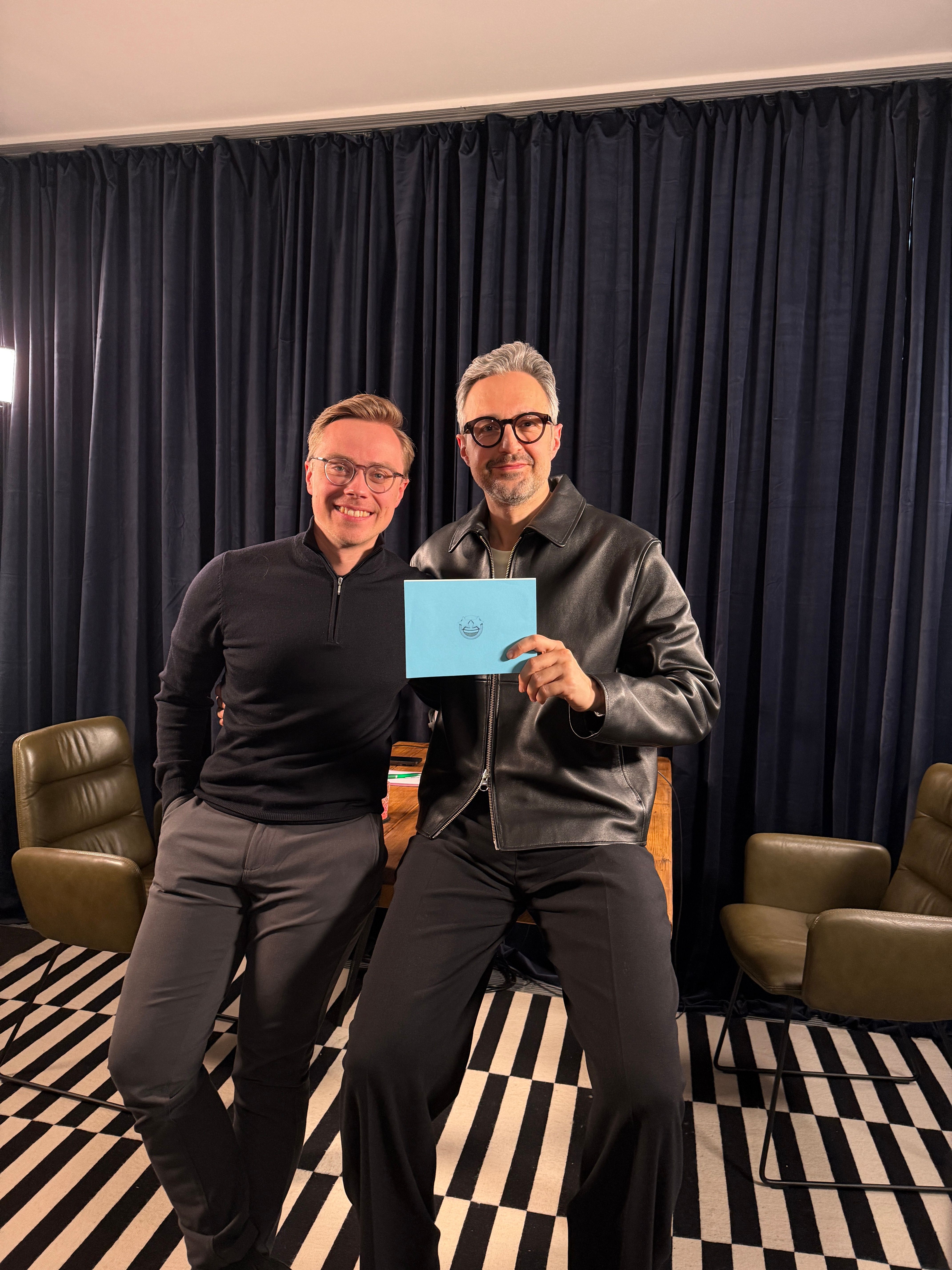
Parloa CEO Malte Kosub’s Series A pitch, which top investors called the best they had ever seen, rested on mechanics. He wrote the story before designing slides, built two separate decks for sending and presenting, created one unforgettable moment, and insisted on presenting for the first 12 minutes of every investor meeting.
Most founders share their deck before the meeting. They screen-share it during the meeting. The investor reads ahead, stops listening, and opens Slack on a second monitor.
You’ve lost them before slide three.
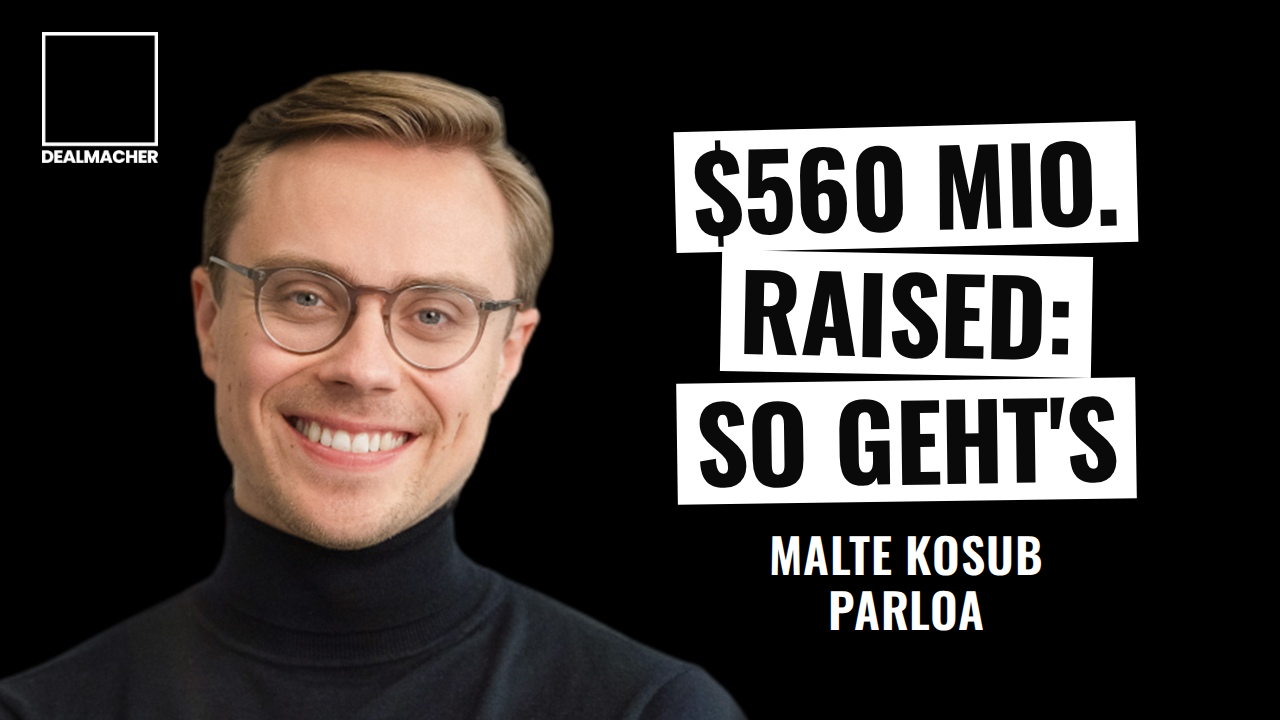
In a recent episode of the DEALMACHER Podcast, I sat down with Malte Kosub, CEO and co-founder of Parloa – $560M raised, $3B valuation, one of the few genuine AI companies built out of Germany.
Malte’s Series A pitch became something of a legend in the VC circles I move in. Top investors called it the best pitch they’d ever seen.
What made it that way was the mechanics – how the story was built, how the room was controlled, how every minute was engineered to land.
Start with the script, not the slides
Before Malte opened Keynote, he wrote the story down. A Google Doc. A narrative. Beginning, middle, end – the full arc in words before a single slide was designed.
This is how films are made. Script first, production second. Most founders do it backwards. They open PowerPoint, start building slides, and reverse-engineer a story from whatever they’ve put on screen.
The result is a deck that looks like a deck – not a story that happens to have visuals.
Only once the narrative was locked did the design begin.
Two decks. Always.
Malte built two completely separate versions. A send-out deck – dense, detailed, designed to be read. And a presentation deck – cinematic, almost no text, built to be watched.
These are not the same document with different font sizes. They are fundamentally different artifacts with different jobs.
The send-out deck answers questions. The presentation deck creates a feeling.
When you show up to a remote meeting and share your send-out deck, you’re competing against your own document. Investors read faster than you speak. By bullet point five they’re three bullet points ahead, and you’ve become background noise.
The presentation deck takes that option away. There’s nothing to read. There’s only you, and what you’re showing.
The moment no one forgot
Malte’s presentation ran 12 minutes. Tight, visual, every second intentional. And somewhere in the middle, he turned his camera off and muted himself.
On a Zoom call. In the middle of a pitch to top-tier VCs.
For about 30 seconds, the slides kept moving. Investors who had been half-distracted suddenly snapped back.
What’s happening? Is he gone? And then the camera came back on, and Malte explained exactly what had just happened.
It was a true S.T.A.R. Moment - “Something They will Always Remember”.
The demo wasn’t a separate section. The demo was woven into the story from the first slide to the last. Show, don’t tell – not as a principle, but as a structural decision.
Insist on presenting. Every time.
Here’s where most founders fold. The VC says “just walk me through it conversationally, no need for the full presentation.” And the founder says okay, opens the send-out deck, and loses control of the room.
Malte never did that. Every meeting, every investor, every round – the first 12 minutes were his. He’d set expectations at the start: here’s how long this takes, hold your questions until the end, then we go deep. Investors respected it. And afterward, consistently, they told him they were glad he’d insisted.
You set the narrative, or the investor sets it for you. There is no third option.
The obsession behind it
What made Malte’s pitch exceptional wasn’t talent. It was the number of iterations. At one point during our Series A work together, he came back with three alternative versions of a single transitional moment in the story – asking which one landed better.
That level of attention – applied to every segment, every visual, every beat of the presentation – is what separates a good pitch from one that people talk about years later.
Practice the same way. Malte ran through the pitch so many times before the official process started that the first real investor meeting didn’t feel like a first. The nerves were already gone. The answers were already sharp.
By the time it mattered, it was muscle memory.
The slide count is not the problem
Malte ended up with over 120 slides in his presentation deck. People hear that and assume it must have felt long or chaotic. It didn’t. Because each slide carried one idea, stayed on screen for seconds, and moved the story forward.
The rule isn’t fewer slides. The rule is no wasted slides. Those are very different things.
Write the story first. Build two decks. Insist on presenting. Create one moment they’ll never forget.
Everything else is a send-out problem.
You can listen to the full conversation with Malte here: id.vc/dealmacher-podcast
Frequently asked questions
Why should founders use two pitch decks?
A send-out deck is dense and designed to be read, while a presentation deck is cinematic with almost no text. If you present the send-out deck, investors read ahead and stop listening.
Should you write the pitch story before building slides?
Yes. Malte Kosub wrote the full narrative in a Google Doc before a single slide was designed, the way films are scripted before production.
What should founders do when a VC asks them to skip the presentation?
Insist on presenting. Malte Kosub set expectations at the start of every meeting, kept the first 12 minutes for his presentation and took questions afterwards. Investors told him they were glad he insisted.
How many slides should a pitch presentation have?
The rule is no wasted slides, not fewer slides. Malte Kosub’s presentation deck had over 120 slides, each carrying one idea and staying on screen for seconds.

