

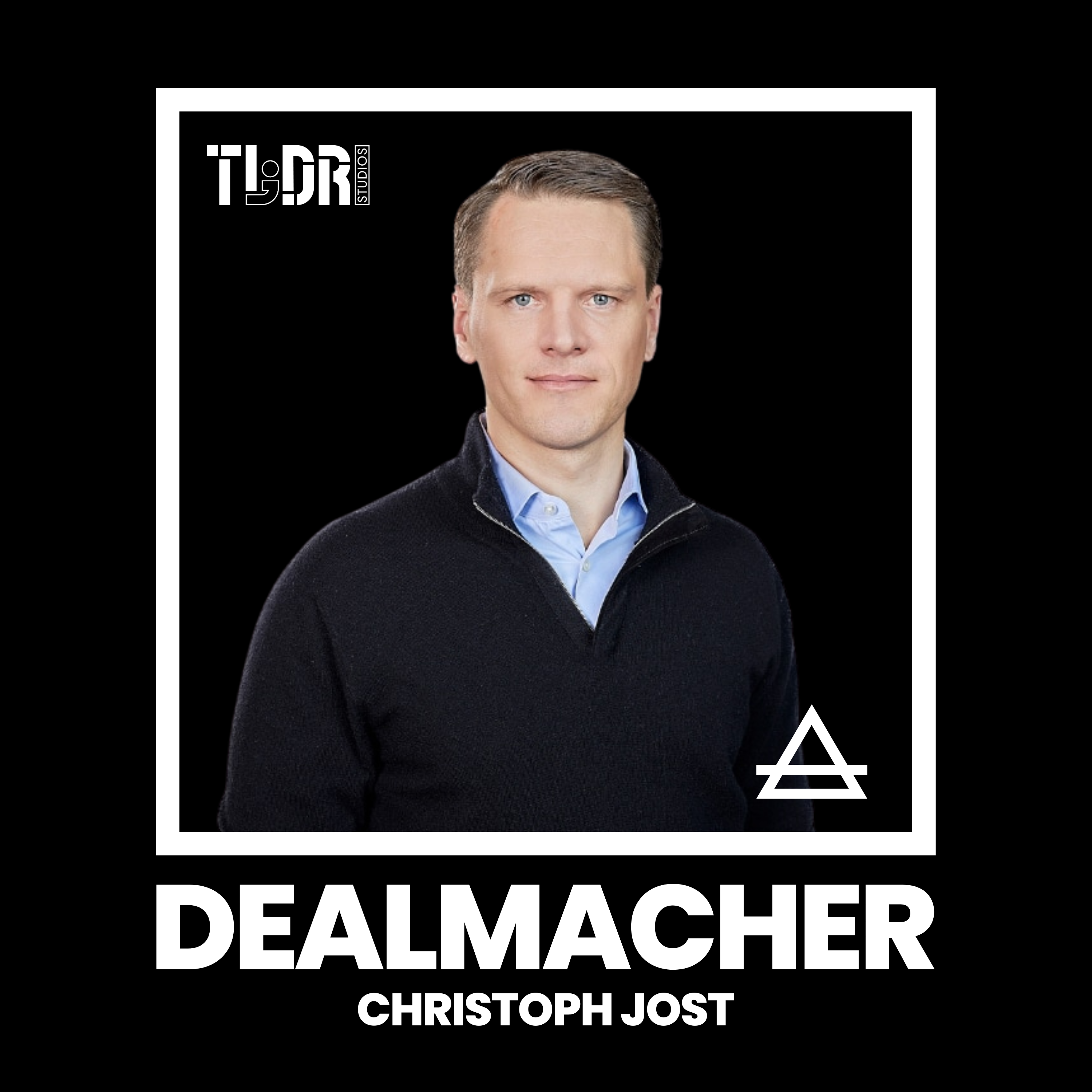
Private equity buyers are often tracking a SaaS company long before its founder thinks about selling. Christoph Jost of Flex Capital explains on the DEALMACHER Podcast how PE firms read signals like management changes and flat revenue, why proprietary deals close faster and more reliably, and why founders should start conversations with two or three PE firms early.
There is a team somewhere right now that has already looked up your company.
They know your revenue range. They’ve checked your founder’s age. They noticed that your CFO left six months ago. They have a proprietary tool with six people running it full-time, pulling signals from company registries, job postings, and management changes. They are not waiting for you to hire a banker. They are waiting for the right moment to call.
This is how modern PE dealflow works. And most SaaS founders have no idea it’s happening.
The asymmetry nobody talks about
When a founder starts thinking about an exit, they typically do one of two things: hire an M&A advisor, or wait until they’re exhausted. Both approaches hand the information advantage to the buyer.
Christoph Jost, Founder and Managing Partner at Flex Capital, has bought twelve platform companies and executed twelve add-on transactions in DACH. He describes his sourcing process with unusual candor: cold calls, champagne bottles sent to congratulate founders on milestones, webinars, events, and a proprietary signal-detection tool that flags when a founder might be ready – before the founder has told anyone.
The signals PE firms track are not secret. A change in managing director. A founder hitting their late fifties. Revenue that has plateaued for two consecutive years. A company that hasn’t made a senior hire in eighteen months. These are publicly available data points. The difference is that a disciplined PE firm is reading them systematically, while you’re running your business.
What proprietary actually means
Every PE firm talks about proprietary dealflow. What Christoph describes is more specific: the goal is to make a founder feel that this conversation is happening only with them. That the buyer has been watching, understands the business, and is not running a process.
“The feeling of telling your counterpart: this is a proprietary deal and I’m only doing this with you – that is a very powerful lever for the founder,” he says.
Why does that matter for you as a seller? Because proprietary deals close faster, with less friction, and with a significantly higher probability of actually completing. The buyer has conviction built over months or years of relationship. They’ve done half their diligence informally. They trust what you tell them because they’ve been watching long enough to verify it.
That is not the same as maximum price – a competitive process will almost always drive a higher valuation. But a founder who wants certainty, speed, and a buyer who genuinely understands the business is often better served by the proprietary path than by a full auction. The trade-off is real and worth understanding before you hire a banker.
A founder who walks into that dynamic cold – through a banker, under time pressure, with no prior relationship – is negotiating from a structurally weaker position.
The coffee meeting is not small talk
Christoph is explicit about what he offers founders who reach out early: an honest assessment of fit, and if it’s not a match for Flex, three or four names of firms that are actively looking for exactly that profile.
This is not charity. It’s relationship-building at scale. The founder who came back two years later, after that first conversation, is the one Christoph already trusts. Less risk, faster process, higher probability of closing.
The VC world has understood this for years. Founders are told repeatedly: build LP relationships before you need the money. The same logic applies to your exit. The buyer who already knows your business will pay more for it – because they’re not pricing in the unknown.
What to do with this
You don’t need to be actively thinking about selling to start these conversations. In fact, the less urgency you have, the better the dynamic. Reach out to two or three PE firms that are active in your space. Not to pitch. To understand what they’re looking for, what the market looks like from their side, and whether your trajectory aligns with what they’d want to own in three years.
If it’s not a fit, you’ll learn something. If it is, you’ve just started building the relationship that will matter most when you’re ready.
The buyer is already thinking about your exit. The question is whether you’re thinking about theirs.
Heard on DEALMACHER Podcast, Episode 13 with Christoph Jost, Founder & Managing Partner at Flex Capital.

Frequently asked questions
How do private equity firms find companies to buy?
Through cold calls, events, webinars and gestures like congratulating founders on milestones. Flex Capital also runs a proprietary signal-detection tool that flags when a founder might be ready to sell.
What signals do PE firms track before approaching a founder?
A change in managing director, a founder in their late fifties, revenue that has plateaued for two years, or no senior hire in eighteen months. These are publicly available data points.
Is a proprietary deal better than a competitive sale process?
A competitive process will almost always drive a higher valuation. A proprietary deal closes faster, with less friction and a higher probability of completing, so the right path depends on whether you want maximum price or certainty and speed.
When should founders start talking to PE buyers?
Before they need to. The less urgency you have, the better the dynamic. Reach out to two or three PE firms active in your space to understand what they look for.

