

Pitching to a VC fund is like selling to an enterprise buying circle: your contact person has to retell your story internally, for example in the weekly pipeline meeting. That makes a clear and compelling story even more important. Founders should choose clarity over completeness and leave details for the discussion that follows.
Clarity over completeness
One of the biggest struggles I observe with founders when it comes to telling a compelling story is that they are keen on conveying everything they think is relevant.
They strive for completeness. You often hear rejections like: “But this is important to know”. They are almost afraid of leaving out pieces. And more often than not it hurts the flow of the story. Only one piece you don’t understand well can mess up the whole thing.
I want you always to remember this: Clarity over Completeness. Clarity over Completeness. Clarity over Completeness.
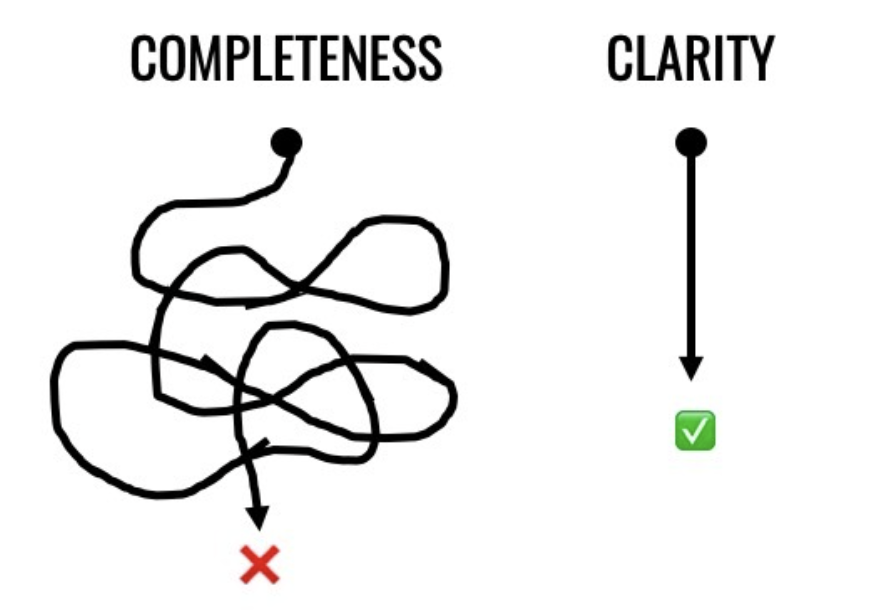
You need to focus on telling a crystal clear and compelling story. And then you’ll get into a discussion where you can go into the details you didn’t mention – if it makes sense.
Less is better – fewer content pieces and facts, well connected, super clear, super compelling. This doesn’t only apply to pitch decks but generally to most presentations and ways of communication.
VCs have to tell your story too
Pitching to a VC is like sales pitching to an enterprise with a buying circle.
Founders too often underestimate that your contact person at a fund needs to tell YOUR story on your behalf internally – e.g., informing their colleagues in the weekly pipeline meeting about your startup.
This multiplies the importance of telling a clear and compelling story for founders:
If you fail with that, your contact person at the fund will either tell your story internally even worse than you or need to invest energy to tell it better than you.
If you tell your story clearly and compellingly, you make your contact person's life easier, and chances will increase tremendously that they will be able to tell a much better story internally when talking about you.
That's a fundamental difference between pitching to angels or micro VCs with one decision maker vs. pitching to VC funds.
It's like sales pitching to an SMB owner who is the sole decision maker vs. pitching to a corporate buying circle.
Frequently asked questions
Why do VCs have to tell a founder’s story?
Your contact person at a fund has to present your startup internally, for example to colleagues in the weekly pipeline meeting. If your story is unclear, they will tell it worse than you or have to invest energy to tell it better.
How is pitching to a VC fund different from pitching to angels?
Angels and micro VCs often have one decision maker. A VC fund is more like a corporate buying circle, where your story has to work when someone else retells it.
What does “clarity over completeness” mean for a pitch?
Focus on a crystal clear and compelling story with fewer, well-connected facts instead of trying to convey everything. Details you leave out can come up in the discussion if it makes sense.

