

A startup fundraising process is the planned order and timing of every investor conversation in a round. The founders who close fast run a quiet warm-up, then compress all first meetings into about two weeks, so term sheets arrive together and investors compete. Parloa ran its Series A this way and had a term sheet within the first week.
What is a startup fundraising process?
A startup fundraising process is the designed sequence of a round: who you talk to, in which order, in which time window and with which materials. Most founders spend months on the pitch deck, the narrative and the market size slide. Then they lose the round anyway, because the process around the pitch was broken.
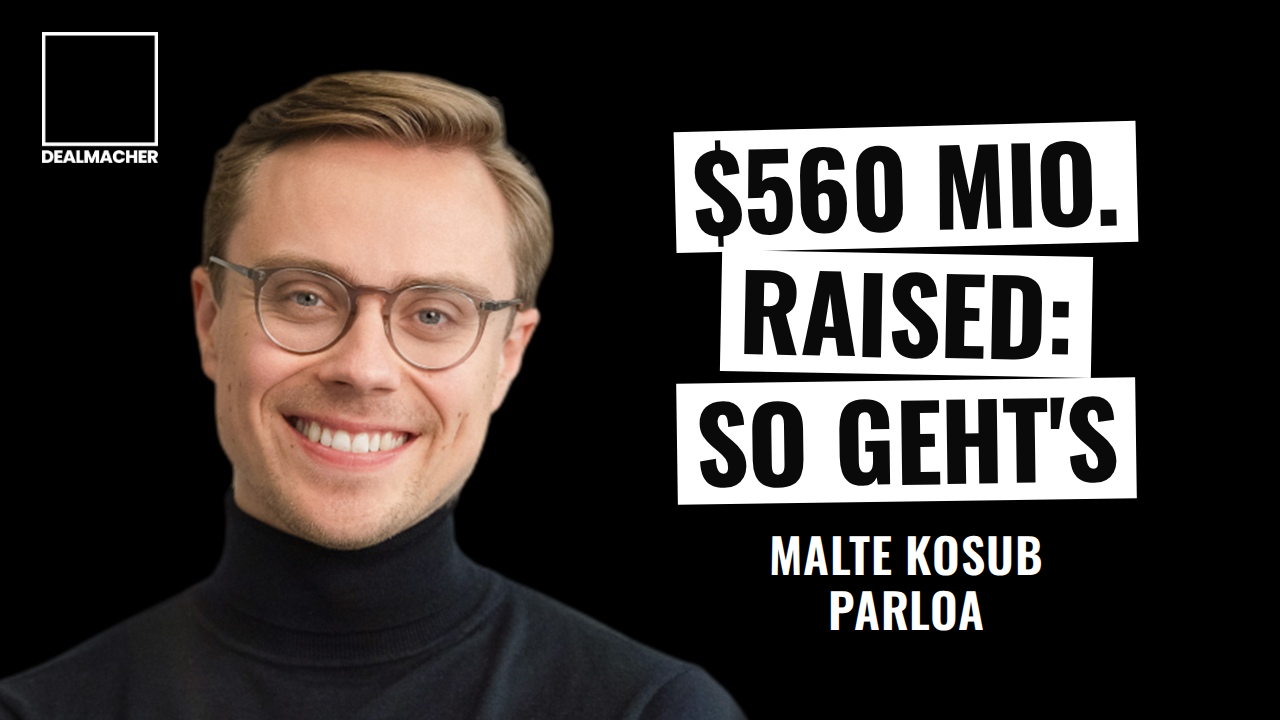
In episode 9 of the DEALMACHER Podcast, Malte Kosub, CEO and co-founder of Parloa, put it plainly: the process is at least as important as the pitch. Parloa has raised over $560 million and reached a $3 billion valuation.
Why do strong pitches still lose rounds?
Because without a deadline, a round drifts, investors compare notes and every rejection makes the next one easier. Parloa's Seed round shows what happens when the process is missing.
- 39 rejections before the round closed.
- One investor left in the pipeline at the end.
- 23 December: the day the last VC called and the round finally closed.
A parallel M&A offer was on the table. The founders put in personal money to cover payroll. What went wrong: no real deadline, no compression of meetings into a short window, no fear of missing out (FOMO) among investors. The process dragged for months, and by the time one investor said no, the next one already knew.
How do you compress a fundraise?
You move every investor through the same short window, so the question shifts from "should we invest?" to "can we still get in?". Parloa's Series A followed three steps.
- Warm-up, weeks before the start. Coffee talks with investors, a hint at the upcoming round, almost no information released. Some investors tried to pre-empt, which means they offered a term sheet before the process even began.
- Two weeks, eight to ten meetings a day. Every investor in the pipeline at the same time. Nobody had a rejection to compare notes on, and nobody had time to say no slowly.
- First term sheet within week one. One early term sheet changed every meeting that followed.
Why is the first term sheet so valuable?
The first term sheet gives you a fallback and a deadline at the same time. First, it changes you: you walk into every following meeting with a BATNA, a best alternative to a negotiated agreement. If everything else falls apart, you still close. Investors feel that confidence.
Second, a credible deadline creates real fear of missing out: every investor in the process knows the round will close soon, with or without them. Parloa's rounds got faster each time:
- Series A: five to six weeks.
- Series B: four weeks.
- Series C: three and a half weeks.
- Series D: days, pre-empted by General Catalyst with eight slides.
With every round, the team got better at running the process.
What should be ready before the first investor meeting?
Everything investors could ask for in the second week of the process. When the first meeting starts, the preparation is already done.
- Data room, complete and structured, before the first call.
- Two pitch decks, finished: a detailed deck that investors read on their own, and a shorter deck that you present live in the meeting.
- Warm investor contacts, identified and ranked.
- Order of meetings, planned. Your top five investors come after you have sharpened your answers in meetings with others, not first.
“The pitch gets you in the room. The process gets you the money.”
Frequently asked questions
How long does a Series A fundraising process take?
A well-prepared Series A can close in five to six weeks from the first official meeting, as Parloa did. Processes without a clear window often run for months and lose momentum.
Should I pitch my top investors first?
No. Pitch them after a few conversations with others, once your answers are sharp, but still inside the same compressed window.
What is a warm-up phase in fundraising?
The weeks before the official start, when you meet investors informally, signal that a round is coming and share almost no material. It builds anticipation without starting the clock.
Do I need a fundraising advisor?
Not for every round. An advisor pays off when the round is large, the timing is tight or you have never run a competitive process. See how fundraising advisory works.

